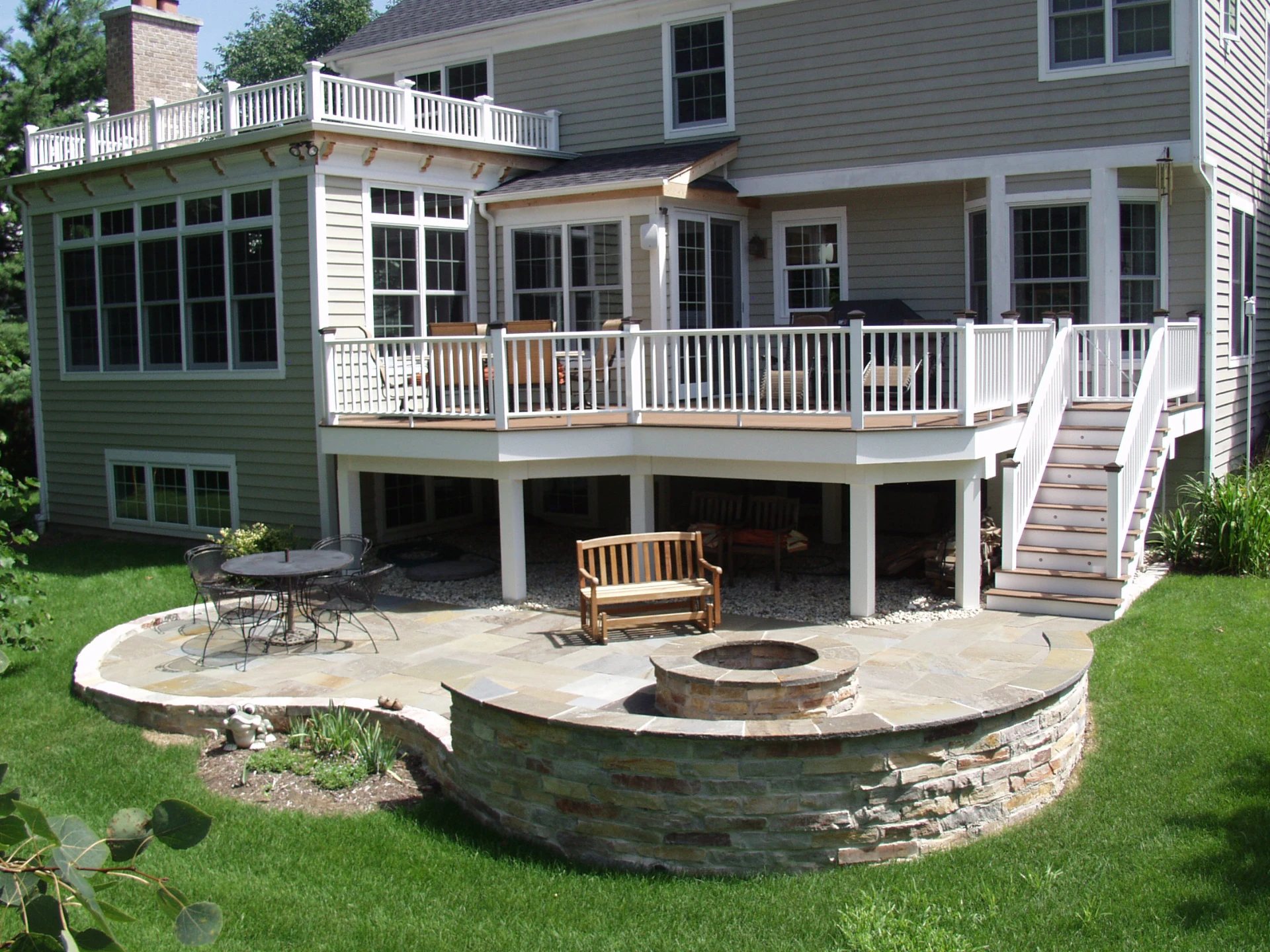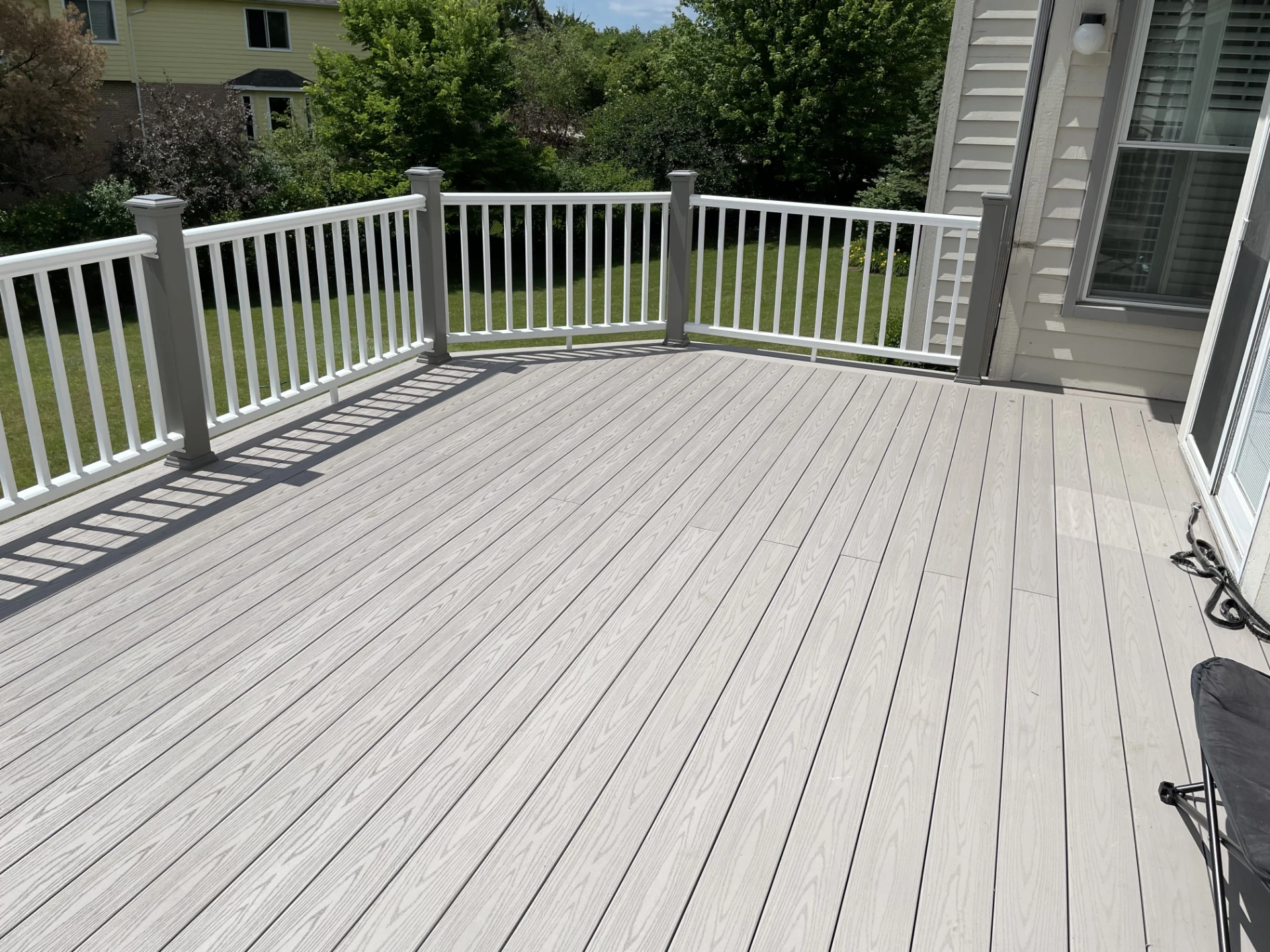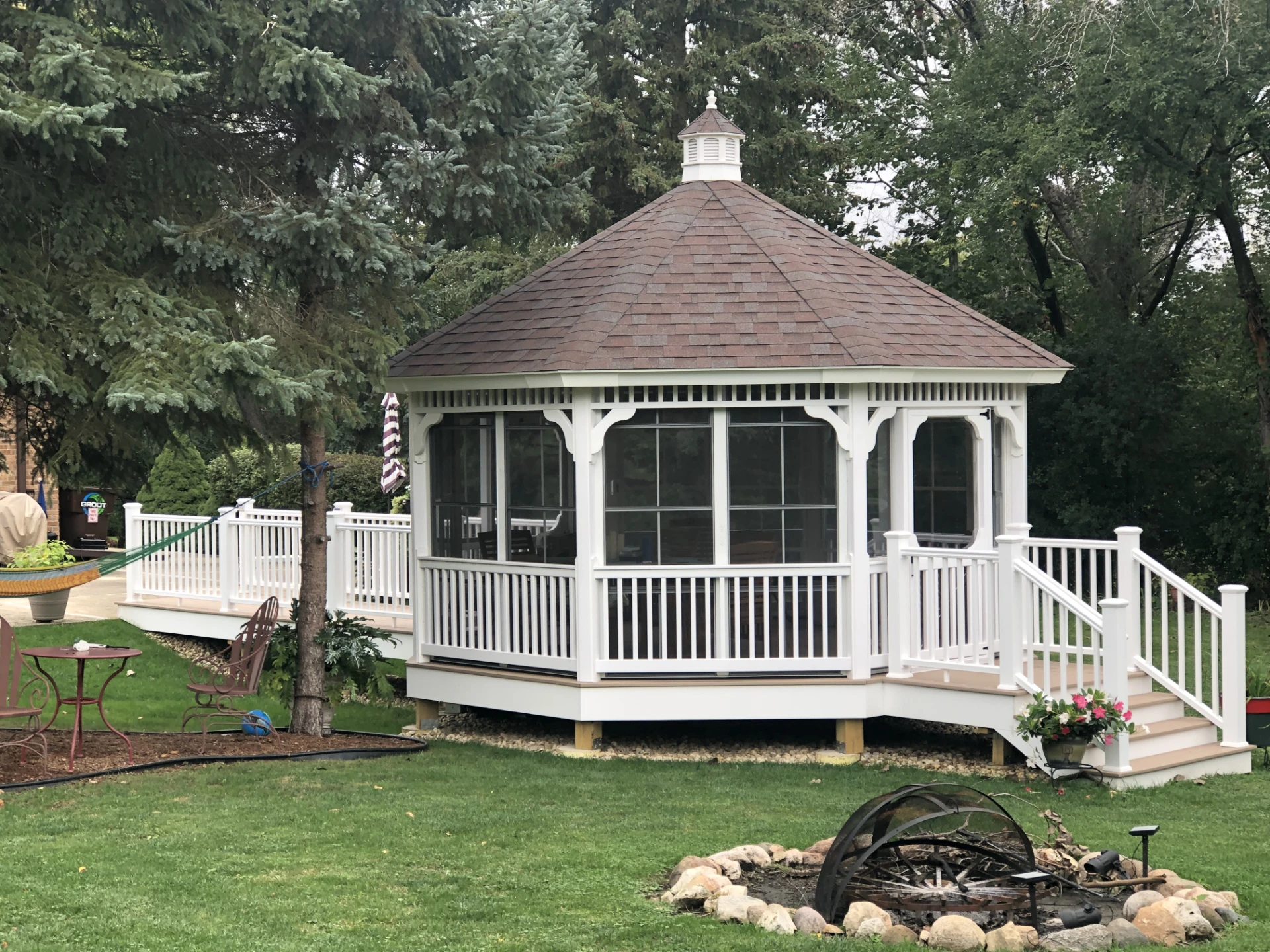


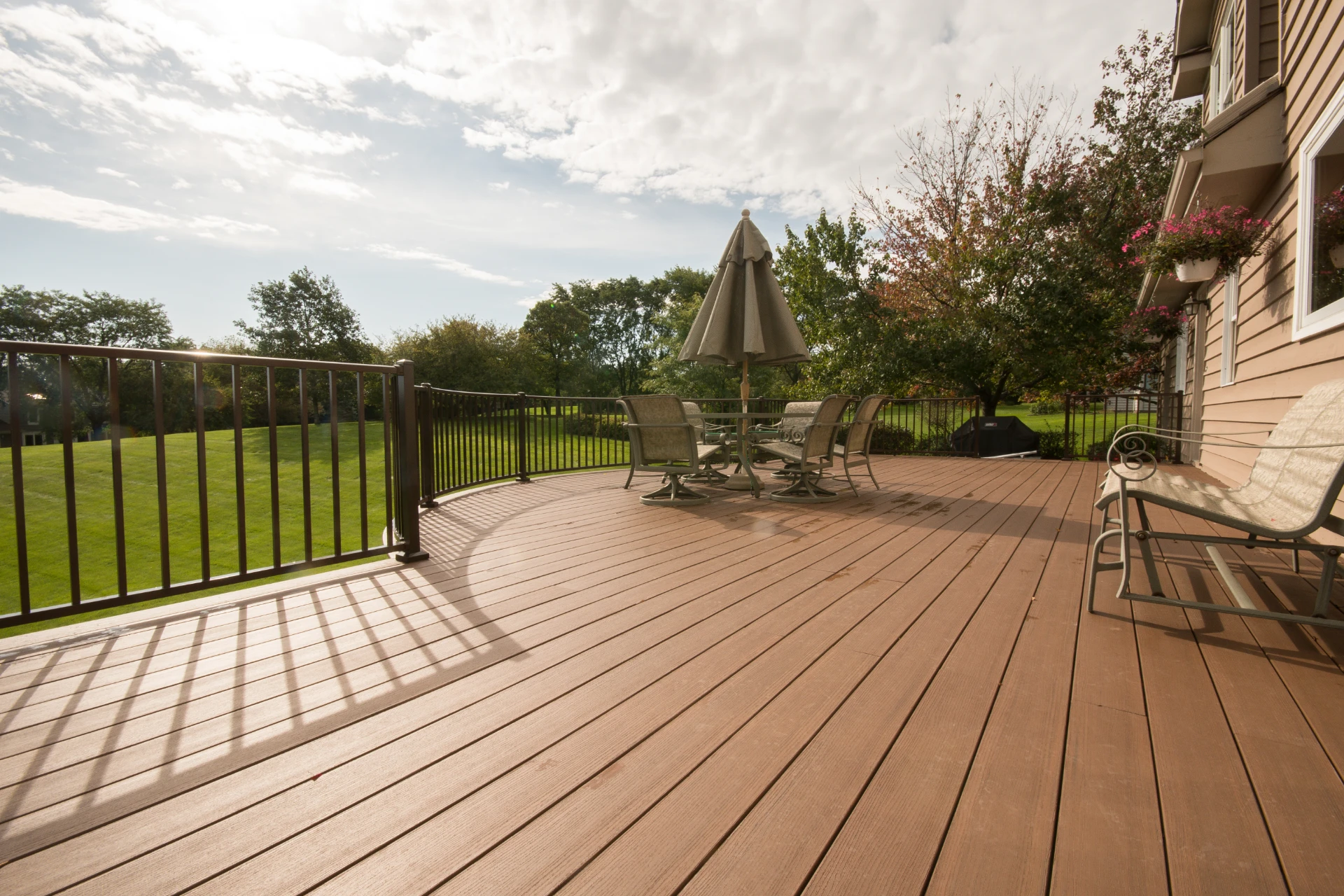
Choose deck skirting ideas that fit your home’s style while leaving the space below your raised deck able to dry and be accessed. Lattice and spaced boards offer openings, while solid-looking panels need a ventilation plan; in either case, include a usable door or removable section and follow the selected products’ installation instructions.
A raised deck leaves a visible space between the deck and the ground, and the right skirting can make that space look like part of the design. When we compare deck skirting ideas, we look beyond appearance to how air will move underneath and how the framing can be reached later. Planning for both from the start helps create a finish that works as well as it looks.
Start With the Space Under Your Deck
The best deck skirting ideas start with what is happening underneath the deck, not just how the finished side will look. Notice where water drains, how much clearance you have, and whether you need to reach a hose connection, wiring, or the deck framing.
A tall raised deck may leave room for storage, while a lower one may only need a way to inspect the structure. Consider the view from the yard and the house, too. You can screen the framing without making every side look like a solid wall.
Compare Deck Skirting Ideas by Material and Layout
Lattice, boards, and panel systems can each finish the edge of a deck differently. The right choice depends on the appearance you want, how much screening you need, and the product’s requirements for your particular deck.
Lattice for a More Open Look
Lattice gives the deck a traditional finish with a pattern of openings. It can soften the view of the framing, though you may still see through it from some angles. Framing the edges and access opening can make the lattice look like a planned part of the deck rather than an afterthought.
Wood lattice can be finished to coordinate with a wood deck. Vinyl lattice offers another appearance, but check the manufacturer’s guidance for support, fastening, and clearance rather than treating every panel the same way.
Horizontal or Vertical Boards for Cleaner Lines
Spaced boards give you control over the direction and rhythm of the skirting. Horizontal boards can carry the deck’s lines across a long side; vertical boards can break up a tall expanse. Wider gaps reveal more of the space underneath, while tighter spacing screens more of it.
Wood, composite, and PVC can each create that look. If you want the skirting to coordinate with the decking, compare actual colors and textures in daylight. Also check the instructions for the specific boards, including support and movement allowances. Matching the surface does not mean the same installation details apply below it.
Solid-Looking Panels for More Screening
Solid wood panels and stone-look or masonry finishes can hide more of the under-deck space, but that privacy makes planning openings and access especially important. A more enclosed design may need separate vents or open sections, depending on the deck system and site.
Some deck systems place specific limits on enclosed sides. For example, DuxxBak’s product guidance restricts solid skirting with its tongue-and-groove boards. That is a product-specific rule, not a universal recipe for every deck.
Leave Room for Air to Move
Compare deck skirting ideas with ventilation in mind before choosing how tightly to close the perimeter. Spaced boards and lattice provide visible openings, but their presence alone does not establish that a particular deck has the airflow its products require.
Check the decking and skirting manufacturers’ instructions together, including any requirements for cross ventilation, clearances, and openings. Lunawood’s decking guide illustrates why the space beneath a deck matters to ventilation, but its measurements apply to its own system. There is no single gap size we can recommend for every deck.
If the house blocks one side or landscaping crowds another, consider how air can reach the space rather than counting openings on paper alone. Mesh behind a screen may help limit animal entry, but it also changes the open area. Check that combination against the project requirements.
Make Access Part of the Design
A door or removable panel lets you reach the space later without taking apart the finished skirt. Plan its location around the framing, plumbing, electrical equipment, and any items you expect to store below the deck.
Make the opening large enough for the intended work and leave room for a hinged door to swing. A removable panel can blend into a board pattern, provided its fasteners remain reachable. The opening should still be practical after landscaping or a patio goes in.
Account for Drainage and Ground Movement
Skirting does not replace drainage or an under-deck water-management system. Look at where downspouts discharge and how water leaves the area, then keep the selected materials clear of the ground as their instructions require.
Allow for changes at the bottom edge instead of assuming the ground will stay fixed. Decks.com’s installation guidance cautions against anchoring a skirt to the ground where frost movement can damage it. If snow, planting beds, or an uneven slope affect the area, address those conditions in the layout rather than burying the bottom of the finish.
Choose a Finish That Works Beyond the First Day
When you compare deck skirting ideas, look at the full project: what you see from the yard, how the underside can dry, and how you will get back in. A neat access panel and well-planned openings can be part of the design, not compromises added afterward.
At Woodridge Deck & Gazebo Co., we build custom raised decks and can discuss skirting options that suit your project. Explore our deck construction services, then call (847) 577-2722 to request a free estimate.