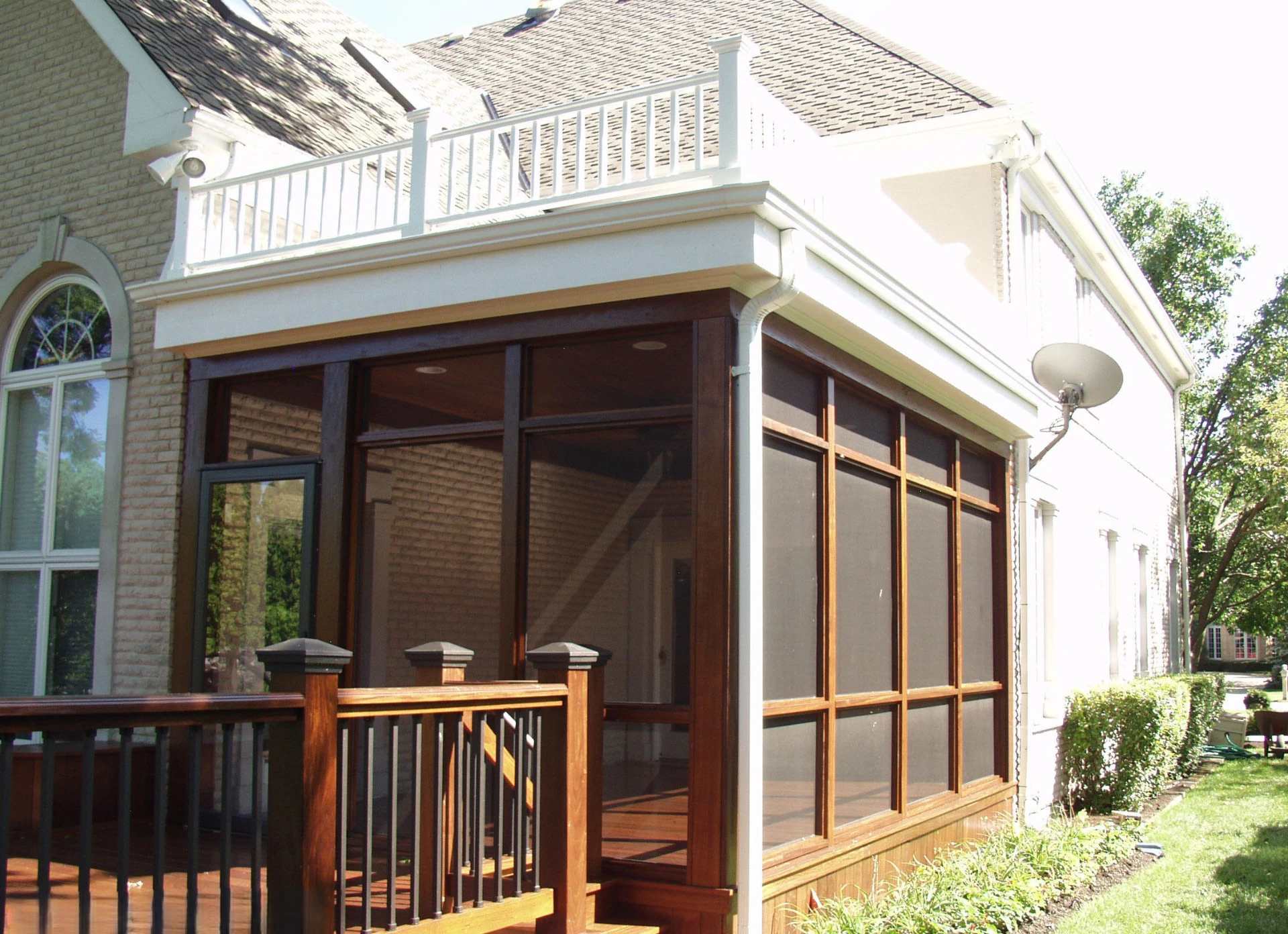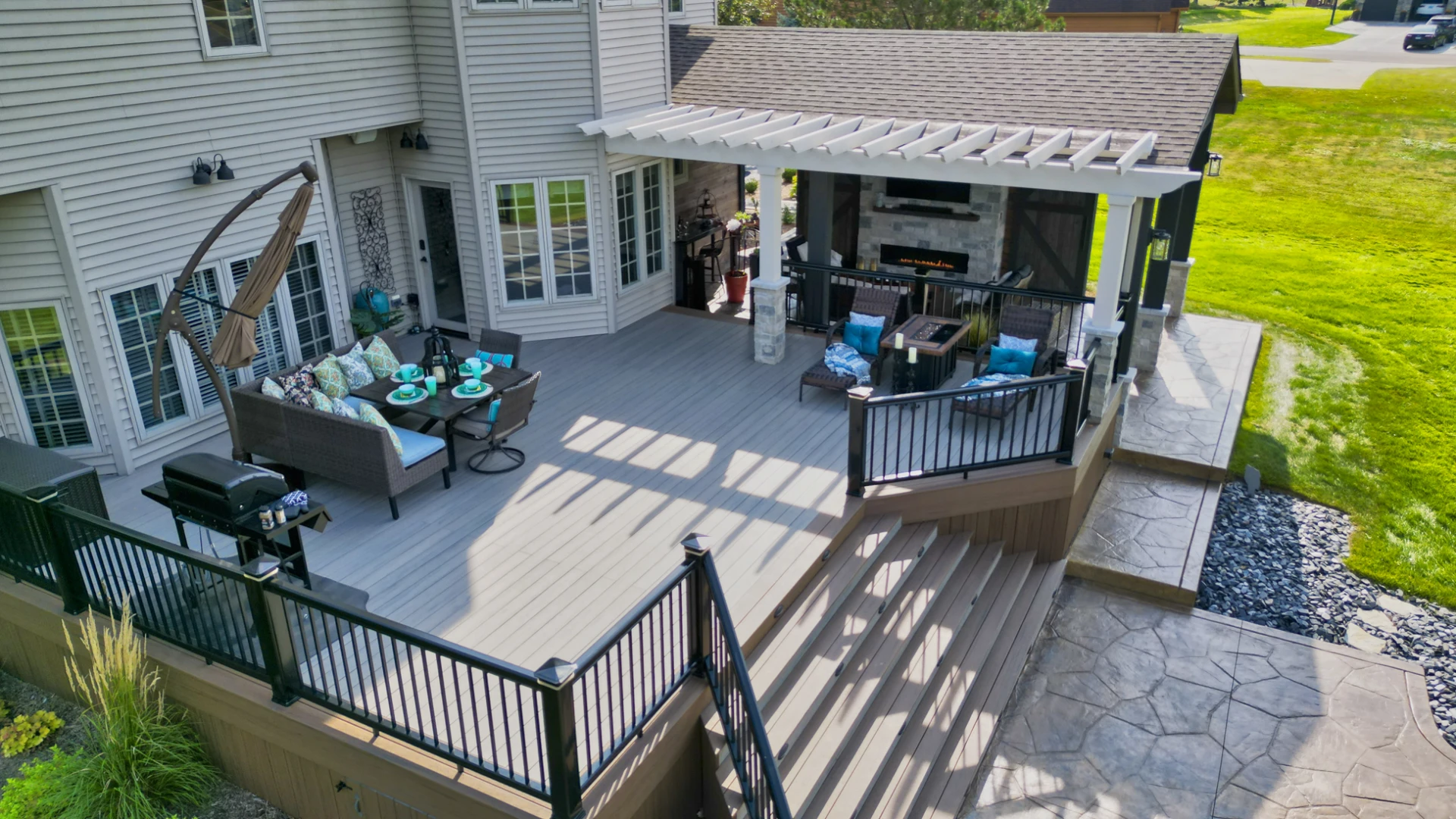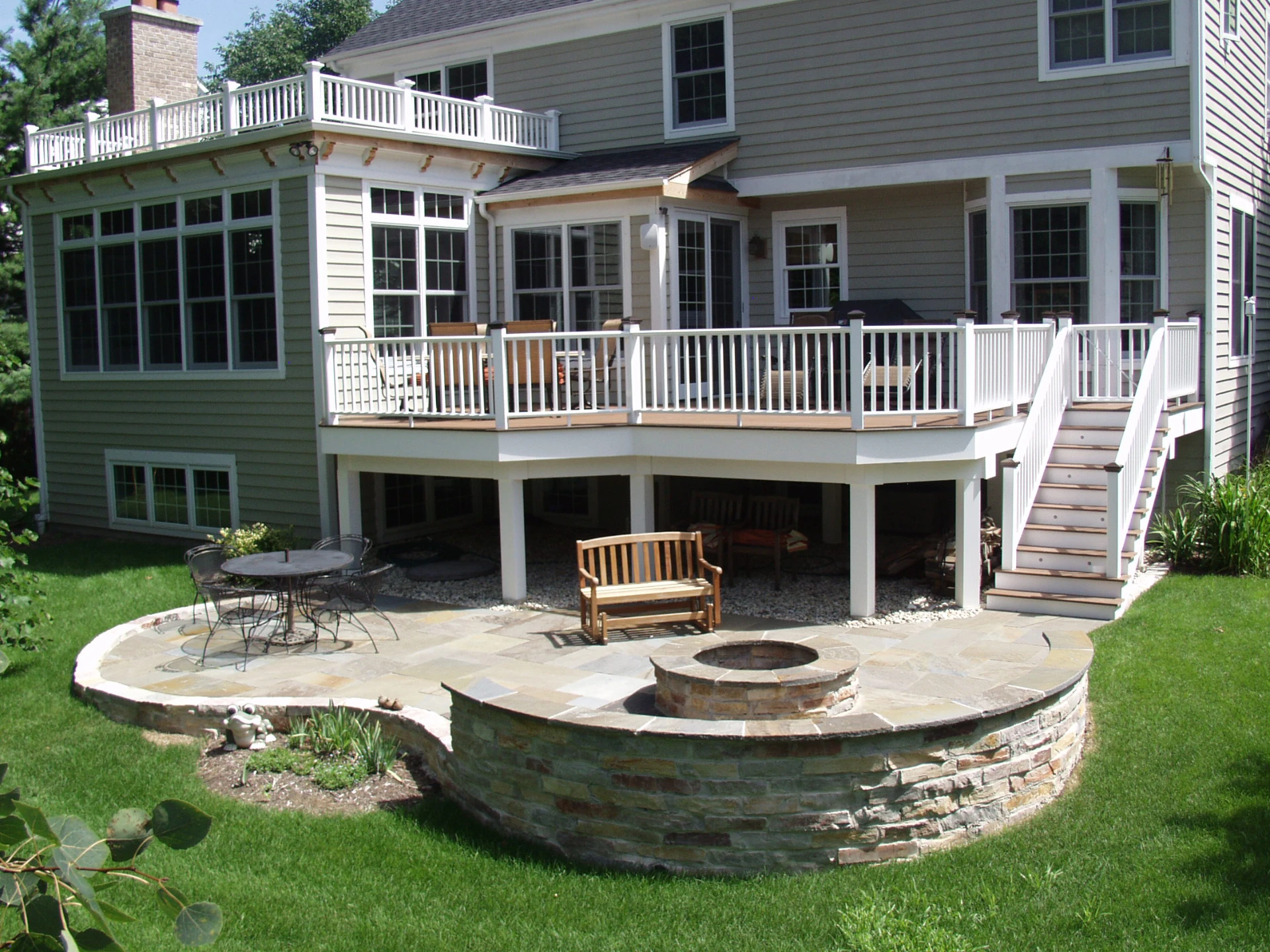


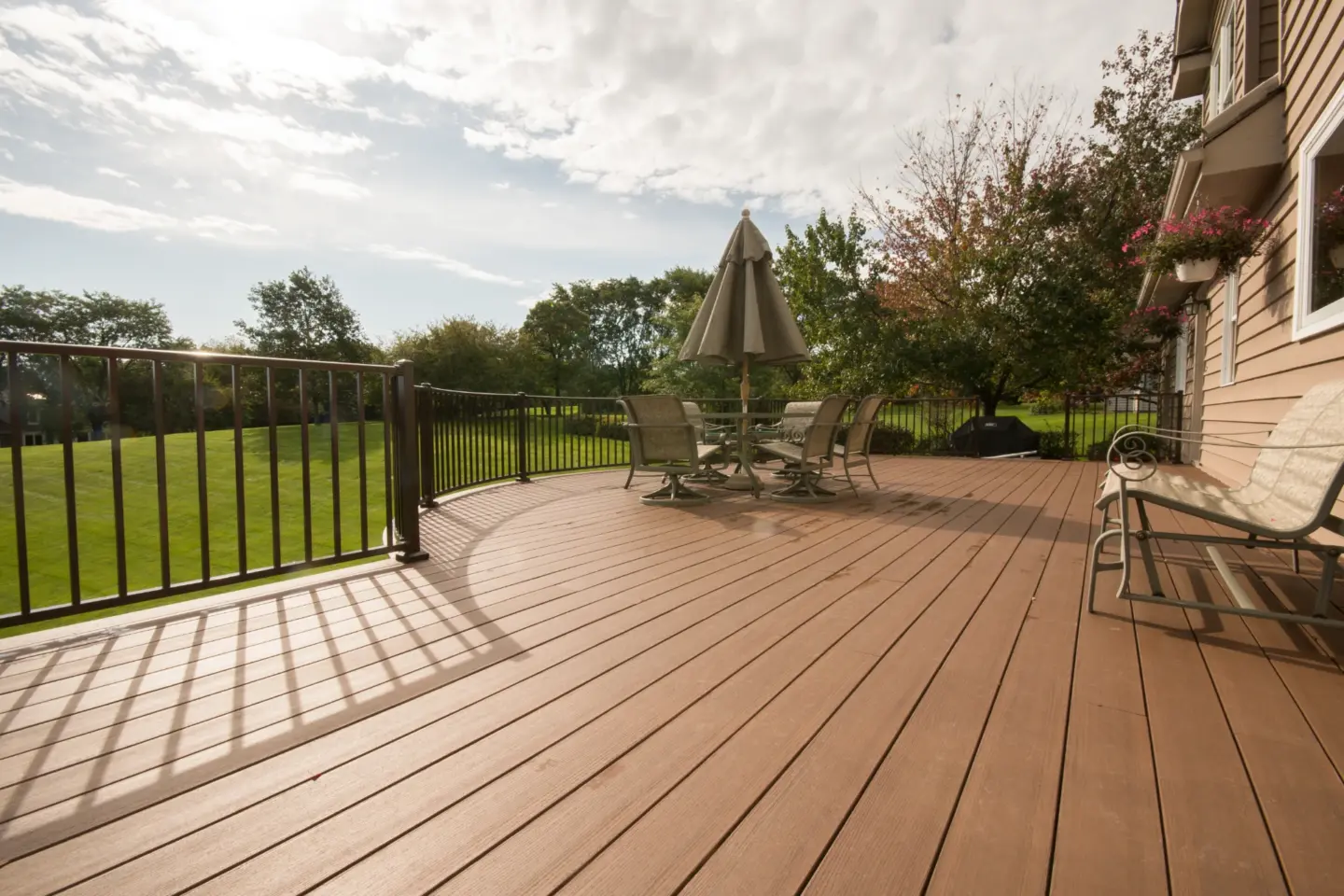
Schaumburg homeowners face one of the most demanding deck climates in the country. Northern Illinois cycles through roughly 56 freeze-thaw events every year, with summer humidity that pushes past 70 percent and winter cold that can drop deep below zero. Most building materials struggle against this kind of seasonal abuse. Pressure-treated southern yellow pine has held up against it for decades, and it remains one of the smartest choices for residential decks across the Chicago suburbs.
This guide explains how pressure-treated wood actually works, why it survives Schaumburg’s brutal freeze-thaw cycle better than most alternatives, and what to look for when planning a build that lasts. Material grade, framing decisions, footing depth, and proper permit planning all play a role in whether the finished deck holds up for two decades or fails in five.
How Pressure-Treated Wood Actually Works
Pressure-treated wood starts as southern yellow pine, a softwood with a tight grain that absorbs preservatives deeply when treated under high pressure. The treatment process forces chemical preservatives into the wood fiber, creating long-lasting protection against rot, insects, and decay that the wood would never resist on its own across the seasons of Illinois weather.
The preservatives used today are much safer than the older CCA formulations that dominated the market decades ago. Modern pressure-treated wood uses copper-based preservatives that protect the wood without the environmental concerns of earlier generations of treated lumber. The result is a deck material that costs a fraction of exotic hardwoods or premium composites while delivering structural performance that rivals far more expensive options on the market today.
Why It Survives 56 Freeze-Thaw Cycles a Year
Schaumburg’s freeze-thaw cycle is brutal on outdoor materials. Water enters tiny cracks in wood, freezes overnight, expands with massive force, and tears wood fibers apart from the inside. Across 56 cycles per year, untreated lumber simply cannot survive without rotting, splitting, or losing structural integrity within just a few short seasons of installation.
Pressure-treated wood handles this cycle far better than untreated alternatives thanks to the deep preservative penetration that fills the wood cells. The chemicals slow water absorption, resist the fungal decay that follows moisture intrusion, and keep the wood structurally sound even as it cycles through expansion and contraction year after year. A properly installed pressure-treated wood deck delivers 20 to 25 years of service in the Schaumburg climate with the right framing underneath.
Choosing the Right Grade and Brand
Not all pressure-treated lumber performs equally, and grade selection matters far more than most homeowners realize. Standard pressure-treated lumber from local suppliers works well for general construction, but premium-grade products deliver tighter grain, fewer knots, and better dimensional stability that pays off across the life of the deck without question.
ProWood pressure-treated lumber is one of the leading options for residential decks in the Chicago area. PWT Lumber (Premium Wood Treated) and KDAT Lumber both deliver upgraded performance through additional drying or laminated construction that resists the warping and shrinking common with standard stock. OC Lumber rounds out the quality pressure-treated wood options available for serious Schaumburg builds.
Framing Matters as Much as the Decking Surface
The framing beneath the deck takes the same freeze-thaw abuse as the surface boards, and it carries the entire structural load above. A pressure-treated wood framing system handles Schaumburg conditions reliably when properly specified, with PWT Lumber, KDAT Lumber, and standard pressure-treated lumber all delivering strong performance over decades of use across the build.
Footings carry that framing down to stable soil below the 42-inch Illinois frost line. Schaumburg builds use traditional concrete footings as the primary choice, with helical piers and diamond piers as alternatives depending on the lot conditions. Combining quality pressure-treated wood framing with proper footings creates a structural foundation that handles the brutal northern Illinois climate for decades without settling, shifting, or losing strength.
Planning a Build That Lasts
A successful pressure-treated wood deck starts with proper planning long before the first board goes down. 3D deck design and modeling show exactly how the finished deck will sit on the property, including layout, materials, and railing options. This step catches setback issues, slope challenges, and access problems before construction begins, which saves significant cost compared to discovering these problems mid-build.
Permit acquisition follows the design phase, and Schaumburg requires permits for nearly all new deck construction. A qualified contractor handles the entire permit process from submission through approval, including structural plans that show footing locations, framing layout, beam sizing, and connection details required by Illinois code. For expert pressure-treated wood deck design and installation in Schaumburg and across the surrounding Illinois communities, contact Woodridge Deck & Gazebo Co. at (847) 577-2722 to schedule a consultation and build a deck that lasts through every freeze-thaw cycle.